Showing posts with label curriculum. Show all posts
Showing posts with label curriculum. Show all posts
Wednesday, June 8, 2011
Seven Year Itch: Finding our Direction Again
I am still in the process of finalizing our school plans for next year, but I have to say I am experiencing a wave of excitement about homeschooling that has been missing over the past year or two. I guess I would have to say I have been experiencing the "7 year itch" in our homeschool, feeling burned out, un-inspired and just plain tired. I moved through the past year in a frantic deadline mode, just trying to make it through the next obligation or responsibility, and there have been a lot of them. In January, I recommited to making life simpler, and named this the Year of Less. With a completed family mission statement as my guide, I have tried to evaluate everything in my life - our home, the things we own, the commitments I already had, and current and future activities. Organized Simplicity serves as the inspiration for simplifying the home as I am slowly moving through each room and reducing and finding a place for everything. I have stuck to my promise and not commited to any new activity or project without careful consideration. This coming weekend fulfills the last of my major responsibilities for the year outside of my duties as a catechist. I feel as if a huge weight is being lifted. Ultimately, the computer problems have been a blessing - it has greatly reduced my online time (I hate to surf the web on my laptop!) and apparently one of the casualties of the crash was my email inbox. While I know there were things in there I will probably regret losing, my inbox is practically empty, so a clean start there as well! I am now itching to get my hands back on all of my planning files, which thankfully were NOT lost, and as the new school year unfolds before us, I look forward to making it a year to remember. I hope to have an outline of our studies up soon with our book selections and plan for the year - and look forward to hearing what others have planned for the school year. Until all of the programs have been reinstalled on the computer, here is a peek at where we are headed. We will be diving into an ocean of exploration - following the path of the great explorers in their journeys across the ocean with books such as The Brendan Voyage and Kon Tiki. We will be diving deep to learn about the creatures living under that ocean pathway to new worlds, as well as other aspects of physical science that affect water travels. We will soar over the ocean for another perspective, and when we finally land, we will explore that new world and its exciting beginnings . Artists and composers have been selected to compliment our travels, as well as a selection of poetry and memory work. If anyone has a favorite book to recommend that would go along with our studies, please share, and I would love to hear from anyone who is planning to follow a similar journey this year!


Friday, February 11, 2011
First Grade
I never got around to posting our plans for First Grade this year, and as I was turning in grades thought I would give you a picture of what the Queen's year looks like. We keep it pretty simple!
Christian Studies:
Catechesis of the Good Shepherd - she is the oldest child in our group, just barely making the cut :) but I love having her in class and working with her
Classical Studies:
Aesop's Fables - we read, narrate, and love this coloring book for the days she doesn't feel like creating her own illustrations, and we love to listen to them on audio as well
English Studies:
Wooden Letter Spelling
Bob books
McGuffey's Readers
The Primer
Mathematics:
We spent the first part of the year still playing around with puppets and acorns, and last week we moved on to Singapore for added practice.
History:
Child's History of the World as a read aloud. Not spending a lot of time here, our co-op covers a few basic topics on the Middle Ages.
Science:
Zoology 1: Flying Creatures - this is covered through our co-op, so I don't do much at home other than provide books at her level that coordinate with the topics
Burgess Bird Book - a family favorite!
Art & Music:
piano lessons
Charlotte Mason style studies of composers and artists
Physical Education:
gymnastics
Christian Studies:
Catechesis of the Good Shepherd - she is the oldest child in our group, just barely making the cut :) but I love having her in class and working with her
Classical Studies:
Aesop's Fables - we read, narrate, and love this coloring book for the days she doesn't feel like creating her own illustrations, and we love to listen to them on audio as well
English Studies:
Wooden Letter Spelling
Bob books
McGuffey's Readers
The Primer
Mathematics:
We spent the first part of the year still playing around with puppets and acorns, and last week we moved on to Singapore for added practice.
History:
Child's History of the World as a read aloud. Not spending a lot of time here, our co-op covers a few basic topics on the Middle Ages.
Science:
Zoology 1: Flying Creatures - this is covered through our co-op, so I don't do much at home other than provide books at her level that coordinate with the topics
Burgess Bird Book - a family favorite!
Art & Music:
piano lessons
Charlotte Mason style studies of composers and artists
Physical Education:
gymnastics
Saturday, September 25, 2010
Sixth Grade Plans
Planning this year has seemed harder than in past years. I suppose part of that is the heavy burden that a homeschool parent begins to feel as your children get older, the fears, the self-doubt, the second-guessing. Part of it is because I have allowed my time to become too scattered, I have fallen away from my routines as I put all my effort into several other projects. Part of it is getting older :) So, here we are, the end of September, and I finally feel as if I have a plan, sort of!
Christian Studies:
Rostov's Lives of the Saints
Saints of Anglo-Saxon England
The Holy Unmercenary Doctors
Here I am keeping it pretty simple. Some days we will read Rostov's lives together in the morning. Other days he will read it independently. It is so far my favorite collection of saints lives, the translation is nice, and is very readable for all. I am also using Sanctity through the Centuries to help incorporate lives of the saints into our history studies.
Math:
If you have read my blog for long, you know my feelings on this subject. And, once again, I have to eat crow and say, we are using Saxon. I hate it. Last year the crocodile hunter hated it. But, we finally turned a corner over the past few months, and I will be honest, it is great to have him be able to work so independently in this area.
Latin & Classical Studies:
First Form Latin
Augustus Caesar's World
Horatius at the Bridge
After what seems like forever, we finally wrapped up Lively Latin Book 1. I think it was a good choice, and will use it again. Now, we are moving on to something more rigorous, and I hope Memoria Press' First Form will provide us with that. For fun, he will read Augustus Caesar's World. As a long term goal for the year, he is going to attempt to memorize Horatius at the Bridge, a feat which is attempted by the 6th graders of Highlands Latin School each year.
History & Geography:
Middle Ages History Portfolio
Famous Men of the Middle Ages
The Core - I learned about this book at a Classical Conversations Practicum this summer, and it contains a great method and plan for teaching mapping skills, so we will be using those this year for our geography.
English Studies:
IEW Developing Linguistic Patterns through Poetry - still loving this resource!
Spell to Write and Read
Robinson Curriculum booklist for literature
Science:
Exploring Creation with Zoology 1 - our co-op is covering this book, as well as a short series of lessons on aviation by a homeschool dad who is a pilot
Burgess Bird Book for Children - this is a great complement to Flying Creatures, and I bought each child a Peterson Field Guide coloring book as well as the Audubon birds coloring book. More on how we are using these in a later post.
Music & Art:
Piano Lessons - he received his first "real" piece of classical music to learn this week - a simple piece by Beethoven, but not a simplified version. He is very excited to learn to play a classical piece just as the composer wrote it!
Beginning Drawing
The Art of Watercolor
Byzantine Chant - there is a wonderful series of podcasts on Ancient Faith Radio which we are going to try to follow along with at a very slow pace
Composers: Tchaikovsky, Rachmaninoff, Prokofiev (here is our approach to composer study using Charlotte Mason's methods)
Artists: Audubon, Cassatt, O'Keefe - we also follow Charlotte Mason's picture study method for art appreciation
Physical Education:
Karate - he is close to earning a green belt, which means by next summer he could be a brown belt!
Running
Christian Studies:
Rostov's Lives of the Saints
Saints of Anglo-Saxon England
The Holy Unmercenary Doctors
Here I am keeping it pretty simple. Some days we will read Rostov's lives together in the morning. Other days he will read it independently. It is so far my favorite collection of saints lives, the translation is nice, and is very readable for all. I am also using Sanctity through the Centuries to help incorporate lives of the saints into our history studies.
Math:
If you have read my blog for long, you know my feelings on this subject. And, once again, I have to eat crow and say, we are using Saxon. I hate it. Last year the crocodile hunter hated it. But, we finally turned a corner over the past few months, and I will be honest, it is great to have him be able to work so independently in this area.
Latin & Classical Studies:
First Form Latin
Augustus Caesar's World
Horatius at the Bridge
After what seems like forever, we finally wrapped up Lively Latin Book 1. I think it was a good choice, and will use it again. Now, we are moving on to something more rigorous, and I hope Memoria Press' First Form will provide us with that. For fun, he will read Augustus Caesar's World. As a long term goal for the year, he is going to attempt to memorize Horatius at the Bridge, a feat which is attempted by the 6th graders of Highlands Latin School each year.
History & Geography:
Middle Ages History Portfolio
Famous Men of the Middle Ages
The Core - I learned about this book at a Classical Conversations Practicum this summer, and it contains a great method and plan for teaching mapping skills, so we will be using those this year for our geography.
English Studies:
IEW Developing Linguistic Patterns through Poetry - still loving this resource!
Spell to Write and Read
Robinson Curriculum booklist for literature
Science:
Exploring Creation with Zoology 1 - our co-op is covering this book, as well as a short series of lessons on aviation by a homeschool dad who is a pilot
Burgess Bird Book for Children - this is a great complement to Flying Creatures, and I bought each child a Peterson Field Guide coloring book as well as the Audubon birds coloring book. More on how we are using these in a later post.
Music & Art:
Piano Lessons - he received his first "real" piece of classical music to learn this week - a simple piece by Beethoven, but not a simplified version. He is very excited to learn to play a classical piece just as the composer wrote it!
Beginning Drawing
The Art of Watercolor
Byzantine Chant - there is a wonderful series of podcasts on Ancient Faith Radio which we are going to try to follow along with at a very slow pace
Composers: Tchaikovsky, Rachmaninoff, Prokofiev (here is our approach to composer study using Charlotte Mason's methods)
Artists: Audubon, Cassatt, O'Keefe - we also follow Charlotte Mason's picture study method for art appreciation
Physical Education:
Karate - he is close to earning a green belt, which means by next summer he could be a brown belt!
Running
Friday, February 5, 2010
Just in case there is anyone out there who cares :) I have updated my set of Orthodox phonics cards so all the letters are there. These do not correspond to the Letters of Grace plan, as I had already developed them before being asked to join that project. I had plans to create a full reader to go with them, and may still complete that project, but for now I am putting my efforts into the work on LOG. If I find the time when the first phase of LOG is complete, I will finish the reader and share it. For, now, here are the completed cards for those of you who downloaded an incomplete set. They are not nearly as nice as what we will soon be sharing, but are one more tool a parent might use in teaching their child. I could not find a "Qu" saint with an icon available (a nice part of LOG, having a talented young artist create custom paintings!) so I reused an icon of the Theotokos as Queen. I did not want to change the letter Mm card, as they were designed to be worked through in order beginning with M, and I really like the idea of starting with Mary. Also, a few of the saints have been changed due to personal preference :)
Wednesday, September 23, 2009
Getting the Most Bang for your Buck
There are so many things out there a homeschool parent could buy, and I have certainly wasted my share of dollars on the unnecessary. So, here is a list of the products I have purchased that I consider to have long term value. These are the things I find myself using frequently, and feel confident we will not outgrow.
Uncle Josh's Outline Maps - what else do you need for geography? (besides some fabulous living books of course!)
Educational Fontware - I wanted this years ago, but never bought it. I finally purchased it this year, and I will never buy another handwriting or copywork book!
Story of the World CD's- this is something my kids return to year after year, they love listening to them in the car, while playing, at lunch, anytime :)
Living Memory - a wonderful resource for memory work in all subjects - recitation at your fingertips
Practical Arithmetics - can't beat the price for no nonsense math books, similar to Ray's, only covers a few topics Ray's does not
Uncle Josh's Outline Maps - what else do you need for geography? (besides some fabulous living books of course!)
Educational Fontware - I wanted this years ago, but never bought it. I finally purchased it this year, and I will never buy another handwriting or copywork book!
Story of the World CD's- this is something my kids return to year after year, they love listening to them in the car, while playing, at lunch, anytime :)
Living Memory - a wonderful resource for memory work in all subjects - recitation at your fingertips
Practical Arithmetics - can't beat the price for no nonsense math books, similar to Ray's, only covers a few topics Ray's does not
Tuesday, September 15, 2009
Practical Math
 I just want to update you on our math progress. It has been a long road, but I must say I absolutely love Practical Arithmetics! We are still using Math on the Level drills to learn our math facts, and I am using Math on the Level's concepts chart list to track our progress, and to come up with some fun ways to teach a concept, but overall, I could be totally happy using just the Strayor Upton book. The first book is designed for 3rd and 4th grades. It is a great pick up and go book. Our procedure is simple - I put the book and a dry erase board into the little princess' workbox along with a "work with mom" notice. When she is ready, she comes to me and we sit down and work through a page or two together. Most of the work is oral, with a few problems we work out on the dry erase board. Occasionally there is a list of 15-20 problems for her to write out - those are done in a small composition notebook then turned in to me.
 The crocodile hunter is also working through this book. I decided not to jump into book two with him because I felt like he does not have his facts down well enough, and there are plenty of concepts in book one that he has not learned. I started him in the middle of the book, and we follow the same procedure - we work together for a few minutes, then he does any exercises as needed. It is a relief to have something so simple and so thorough. This book, combined with the 9's Down math drills have become our daily math routine for the older ones. A no nonsense approach without too much repetition - just what this home school needed!
Sunday, September 6, 2009
Going on an Expedition

Our trunk is packed, and we are heading to Africa this year! Here is a look at our geography/continents box - don't you just love that trunk? I feel sorry for anyone who doesn't live within 30 minutes of an Old Time P*ottery Store - can't beat the price on the coolest boxes and baskets! What kid wouldn't be excited about exploring a trunk like that?
So, are you curious? Want to peek inside?
 Here is a look at much of what our box contains. The crocodile hunter graciously loaned us a selection of animals from his zoo, and I pulled books from our shelves (plus a few new purchases :). I found African textile design paper at a school supply store, with directions for creating paper doll clothes. I also included an Ancient Egypt T*ob, and picked up a hand carved gourd from Kenya at TJM*xx. Not in this picture, but included in our studies will be the lives of several saints of Africa - St. Moses the Ethiopian, St. Tekla, St. Anthony the Great, St. Mary of Egypt . We will also spend some time exploring St. Catherine's Monastery in Egypt. We will have a heavy emphasis on Egypt because we are studying Ancient history, but plan to explore other parts of Africa too. I also do not store our maps and general geopgraphy books in the trunk - but the crocodile hunter is learning to identify all of the countries of Africa right now. To see what others put in their boxes, check out these sites:
Close Academy's North America Box
Serendipity's Continents and Cultures
LaPaz - entire collection of continents boxes
Sunday, August 30, 2009
Ancient History Outline
It is hard to believe we have been homeschooling long enough to have completed one four year history cycle (though honestly, we really spent 2 years on middle ages and did not touch much modern history :). But, here we are, ready to dive back into Egypt, Greece and Rome. I am using the history portfolio this year for the crocodile hunter and the little princess, but I have taken the topics to cover from Tapestry of Grace. Really, history in our house consists of lots of reading and fun projects when mommy feels like it, but I do like to have a formal plan - even though we are really, really (I mean really) loose about it. I break things down into terms, but that does not mean we strictly follow a calendar, we move through as it works for us. Sometimes I decide not to cover something, sometimes we spend a lot of time on one topic. But, in order to feel confident in that flexibility, I usually create an outline of the historical period. In that outline I plug in all of the resources I own that correlate with that topic. By no means do we actually read all of those books, or do all of the projects. The outline is my way of reminding myself what my options are. If I feel like doing a project, we will, if the week is too busy, we won't. Usually, I read aloud from a main book, and then have supplemental books the kids can look at on their own time. So, with that lengthy and convoluted disclaimer, I am linking to my Ancient History Plan. The first term is more fleshed out than the others, I still have some information to fill in, but overall, most of it is there.
To give you a look at how it works in our house - our first week of school, it went something like this:
Monday - we read the story of creation from the Bible and the Heavenly Garden during our morning time together and we talked about Asia and where the Garden of Eden might have been
Tuesday - we read Somewhere in the World Right Now, and the first chapter from Child's Geography: Explore the Holy Land and looked at a map of Asia, locating Turkey and the Bosphorus Strait
Wednesday - we looked at What the World Eats - first looking at the US, then Turkey, then they browsed through the book on their own - we had some discussion about the differences in types of food - I read One Humpy Grumpy Camel to the Queen
Thursday - they both colored the days of creation from the Homeschool in the Woods lapbook (we will be putting these elements into the History Portfolio in the appropriate places instead of making a separate lapbook)
Friday - copywork for the History Portfolio, for fun we read The Hungry Coat (folktale from Turkey)
As you can see, it is mostly reading - and most of that was done in our morning time before the kids began their workboxes. Then they continue with fun reading on their own. The only thing we did not do that I want to do - is the Queen has not yet done her watercolors for the days of creation, but since her history will not cover as much as the others, I am not worried if it takes another week or two to get those done. Over the weekend the crocodile hunter read several books on dinosaurs, and decided he wanted to make a map that indicated the locations of all the dinosaur fossils discovered in the USA. He also decided to write several pages about why he believes there might still be dinosaurs alive somewhere today - and this from the kid who HATES to put pencil to paper! So, that is what history looks like around here - though really I guess it is history, geography, science, social studies and literature all in one.
To give you a look at how it works in our house - our first week of school, it went something like this:
Monday - we read the story of creation from the Bible and the Heavenly Garden during our morning time together and we talked about Asia and where the Garden of Eden might have been
Tuesday - we read Somewhere in the World Right Now, and the first chapter from Child's Geography: Explore the Holy Land and looked at a map of Asia, locating Turkey and the Bosphorus Strait
Wednesday - we looked at What the World Eats - first looking at the US, then Turkey, then they browsed through the book on their own - we had some discussion about the differences in types of food - I read One Humpy Grumpy Camel to the Queen
Thursday - they both colored the days of creation from the Homeschool in the Woods lapbook (we will be putting these elements into the History Portfolio in the appropriate places instead of making a separate lapbook)
Friday - copywork for the History Portfolio, for fun we read The Hungry Coat (folktale from Turkey)
As you can see, it is mostly reading - and most of that was done in our morning time before the kids began their workboxes. Then they continue with fun reading on their own. The only thing we did not do that I want to do - is the Queen has not yet done her watercolors for the days of creation, but since her history will not cover as much as the others, I am not worried if it takes another week or two to get those done. Over the weekend the crocodile hunter read several books on dinosaurs, and decided he wanted to make a map that indicated the locations of all the dinosaur fossils discovered in the USA. He also decided to write several pages about why he believes there might still be dinosaurs alive somewhere today - and this from the kid who HATES to put pencil to paper! So, that is what history looks like around here - though really I guess it is history, geography, science, social studies and literature all in one.
Monday, August 17, 2009
Drawing Skills
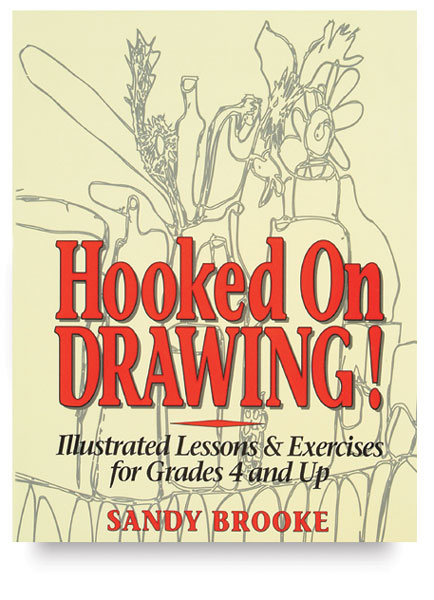
I have shared my plans for artist and composer studies, but what about the studio arts? Over the past year I have used Atelier Art Level 4 and part of level 5 with my kids and their cousins. We have completed all of the lessons I have, and I do not want to move on with Atelier because I think Level 5 is too advanced for my youngest at this time. Instead, I want to shift our focus this year to drawing skills. Since we will be studying botany and have 9 state park field trips planned for nature studies, it seems like a good time to hone our sketching abilities. I found Hooked on Drawing over the summer, and purchased it for the crocodile hunter. It is a very easy to teach step by step set of lessons on drawing. I don't know how often we will use it, I am guessing it will be a weekly assignment scheduled in one of his workboxes. I have created a checklist for the first section of this book which is focused on line drawing, and I like the way each is broken into very manageable exercises. It requires very few supplies (most lessons need paper, pencil or pen, and maybe a few household objects) and seems the perfect art instruction to incorporate into his workboxes. Here is a link to my breakdown for the first section of the book.
Wednesday, June 17, 2009
Math Drills
I am feeling a little guilty after all that trashing of math programs (though hopefully you got the picture that it's not a program issue, it's a user issue:). To balance it out, I am going to share with you my favorite math resource. I mentioned Math on the Level previously, and while I don't know if we will go back to it or not as a whole, I love, love, love their math drills. These are a series of books (or PDF downloads - which is what I got) that approach math drill in a new way. Instead of starting to drill your kids on the 1's or 2's tables (you know, the easy ones!) they begin the drills with the 9's. Once a child understands the process of addition or multiplication you can begin giving these drills. They are timed, and come with a nice page for recording results. The child does the same drill sheet every day until he is able to do it in the suggested time frame (designed to develop an instant recall speed), then he moves on the the next one. It gradually adds new facts, while maintaining practice with the old facts. This way, when your student completes the sheets, he has practiced the hardest ones the most, instead of the other way around. Such a basic concept, why hasn't someone else come up with this before! So, if you are struggling with flashcards, or have a 4th grader who still doesn't have all of this facts memorized :), these are great. I am already seeing a difference in both of the kids recall of math facts.
Wednesday, May 13, 2009
2009-2010 Plans for 3rd Grade
I am having a hard time grasping that the little princess could be in 3rd grade already! A rough outline of what she will be studying is below.
Orthodox Studies:
Old Testament history - this will fall under our history portfolio and ancient history studies
Lives of the Saints
Arithmetic:
Ray's exercises
Strayer/Upton Book 1
Math on the Level
the focus of this year will be multiplication and division
English Studies:
SWR spelling
copywork from lives of the saints
Lively Language Lessons for grammar instruction
progym - I don't think she is ready to start CW Aesop, so I was excited to see that Classical Writing has developed a primer. I think we are going to try that out and see how it goes. It may be overkill, or it may allow us to drop other things, I am going to order it so I can get a better feel for whether it will be the right thing for us this year.
Literature:
Wonderbook
Tanglewood Tales
History:
Pharaohs of Ancient Egypt - using the plans a created last year but put on hold - I will post these in the next week or so
D'Aulaires Greek Myths
Ancient History Portfolio Junior
Geography:
We are going to focus on Africa and the Middle East this year, using ideas from Serendipity.
Science:
Apologia Botany
And again, she will continue pursuing piano lessons, gymnastics, and CM style composer and artist studies. In looking back over our plans, I am excited to say that I have no big purchases to make this year! I already have all of the core books we will be using, a large selection of supplemental reading for both science and history, and much of Kindergarten will be home created items. I know there will be fun books along the way I will want to buy, but it is good to know that most of my curriculum is already sitting on my shelf, and the school budget can be used for extra-curricular activities and "fun stuff".
Orthodox Studies:
Old Testament history - this will fall under our history portfolio and ancient history studies
Lives of the Saints
Arithmetic:
Ray's exercises
Strayer/Upton Book 1
Math on the Level
the focus of this year will be multiplication and division
English Studies:
SWR spelling
copywork from lives of the saints
Lively Language Lessons for grammar instruction
progym - I don't think she is ready to start CW Aesop, so I was excited to see that Classical Writing has developed a primer. I think we are going to try that out and see how it goes. It may be overkill, or it may allow us to drop other things, I am going to order it so I can get a better feel for whether it will be the right thing for us this year.
Literature:
Wonderbook
Tanglewood Tales
History:
Pharaohs of Ancient Egypt - using the plans a created last year but put on hold - I will post these in the next week or so
D'Aulaires Greek Myths
Ancient History Portfolio Junior
Geography:
We are going to focus on Africa and the Middle East this year, using ideas from Serendipity.
Science:
Apologia Botany
And again, she will continue pursuing piano lessons, gymnastics, and CM style composer and artist studies. In looking back over our plans, I am excited to say that I have no big purchases to make this year! I already have all of the core books we will be using, a large selection of supplemental reading for both science and history, and much of Kindergarten will be home created items. I know there will be fun books along the way I will want to buy, but it is good to know that most of my curriculum is already sitting on my shelf, and the school budget can be used for extra-curricular activities and "fun stuff".
Tuesday, May 12, 2009
2009-2010 Plans for 5th Grade
Here is what is shaping up for the crocodile hunter this year. He will be in 5th grade, and while there are still some unknowns (we may be in a co-op that will change/add some elements), this is what I am looking at planning out. Again, much of this follows the Latin Centered Curriculum, though we are continuing with more of a four year history cycle and are back around to Ancient history again this year.
Orthodox Studies:
Young Folks Josephus
The Christians - this is a wonderful series - I have the first 7 books, they are beautiful, informational, fascinating reading, and a very balanced perspective no matter your denomination. I am planning to let him read the first 3 volumes at his own pace. If you have the financial ability to support this project, I encourage you to order from them, these books are well worth the cost.
readings from the Prologue from Ohrid
Arithmetic:
I will continue using a combination of the exercises in Ray's Arithmetic, Math on the Level, and possibly Singapore Math. Since this is the area in which I feel the least confidence, I need to be open to some flexibility. I love the way things are laid out in Math on the Level, but it is nice to have a workbook to fall back on when things get crazy.
Update 6/5: I am planning to drop Singapore, and use the exercises in Strayer/Upton Book 2
Latin:
I am not sure if we will continue with Lively Latin Book 2, but I don't think we are ready for something like Henle. I need to do a bit more research here.
English Studies:
Copywork from lives of the saints
Spelling - we probably need to continue with SWR spelling lists, he is a decent speller, but could use some work still
Literature:
Black Ships before Troy
Wanderings of Odysseus
In Search of a Homeland - if we get that far :)
History:
Famous Men of Greece
Famous Men of Rome
Ancient History Portfolio
Science:
Apologia Botany
So that is the core of our studies, and of course we will continue with CM style composer and artist studies and piano lessons.
Orthodox Studies:
Young Folks Josephus
The Christians - this is a wonderful series - I have the first 7 books, they are beautiful, informational, fascinating reading, and a very balanced perspective no matter your denomination. I am planning to let him read the first 3 volumes at his own pace. If you have the financial ability to support this project, I encourage you to order from them, these books are well worth the cost.
readings from the Prologue from Ohrid
Arithmetic:
I will continue using a combination of the exercises in Ray's Arithmetic, Math on the Level, and possibly Singapore Math. Since this is the area in which I feel the least confidence, I need to be open to some flexibility. I love the way things are laid out in Math on the Level, but it is nice to have a workbook to fall back on when things get crazy.
Update 6/5: I am planning to drop Singapore, and use the exercises in Strayer/Upton Book 2
Latin:
I am not sure if we will continue with Lively Latin Book 2, but I don't think we are ready for something like Henle. I need to do a bit more research here.
English Studies:
Copywork from lives of the saints
Spelling - we probably need to continue with SWR spelling lists, he is a decent speller, but could use some work still
Literature:
Black Ships before Troy
Wanderings of Odysseus
In Search of a Homeland - if we get that far :)
History:
Famous Men of Greece
Famous Men of Rome
Ancient History Portfolio
Science:
Apologia Botany
So that is the core of our studies, and of course we will continue with CM style composer and artist studies and piano lessons.
Monday, May 11, 2009
2009-2010 Plans for Kindergarten
Part of me feels terribly behind, as I am only just now beginning to think about the next school year. Another part of me feels guilty spending time planning for next year when there is so much left to complete this year! But, planning for the next school year invigorates me, it encourages me to press on when the spring begins to drag, it gives me a focus, something to strive towards. I am especially excited/terrified that I will be adding a student this year - the Queen will begin Kindergarten this fall, and while I am really looking forward to teaching Kindergarten again - I am definitely nervous about having three to homeschool (I know, I know, all you mom's with 6 + kids are laughing at me now :). So, I am going to post a basic outline of my tentative plans for Kindergarten next year, recognizing that usually means everything will completely change several times before the fall! As usual, much of my planning comes from Latin Centered Curriculum, with a little CM and Waldorf thrown in for good measure. I will post plans for the other two over the next week.
Orthodox Studies:
Garden of Theotokos - I am planning to use the book of creation, the 12 days of Christmas and the Lent to Pentecost units from this program with her
various Lives of the Saints story books
Children's Bible Reader - OT stories
Phonics:
I am creating a set of Orthodox phonics cards and copywork to use with her (see side bar for link to phonics cards)
Literature:
We will focus on Aesop's Fables, Mother Goose Rhymes, Nursery Tales, and Charlotte's Web. I plan to do lots of reading aloud, and hopefully gradually begin doing narrations.
Math:
We will create a book of numbers Waldorf style, review basic shapes, and will introduce addition and subtraction using Math on the Level ideas and Waldorf story telling as she is ready
Science:
the older ones will be doing botany, so I am planning to use the Flower Fairy Alphabet with her, to correlate with our phonics studies, along with some fun read aloud units corresponding to the seasons
Orthodox Studies:
Garden of Theotokos - I am planning to use the book of creation, the 12 days of Christmas and the Lent to Pentecost units from this program with her
various Lives of the Saints story books
Children's Bible Reader - OT stories
Phonics:
I am creating a set of Orthodox phonics cards and copywork to use with her (see side bar for link to phonics cards)
Literature:
We will focus on Aesop's Fables, Mother Goose Rhymes, Nursery Tales, and Charlotte's Web. I plan to do lots of reading aloud, and hopefully gradually begin doing narrations.
Math:
We will create a book of numbers Waldorf style, review basic shapes, and will introduce addition and subtraction using Math on the Level ideas and Waldorf story telling as she is ready
Science:
the older ones will be doing botany, so I am planning to use the Flower Fairy Alphabet with her, to correlate with our phonics studies, along with some fun read aloud units corresponding to the seasons
Thursday, May 7, 2009
Choosing Curriculum
Ah, the time has come once again to turn thoughts to planning. I must say, this is the part of homeschooling I love, and hate, the most. I love to look over books, spend hours flipping through curriculum catalogs, going to the curriculum fair and seeing all the fun "stuff". My problem, of course, is that like most homeschoolers, I am a curriculum junkie, and I have to be careful not the buy everything that looks good. So, how does one choose? Sometimes I long for the days when I was homeschooled, when the only curriculum shopping my mom did was order a bunch of textbooks from Abeka, Saxon or Bob Jones. Well, okay, not really - but you know what I mean. Sometimes it can be so overwhelming to try to narrow down the choices, to not get sidetracked by the shiny new curriculum just out, the latest buzz on the curriculum boards.
So, how do I go about it? Well, to start, I think it is really important to know yourself and your kids. Homeschooling takes a lot of self-discipline. It's hard to get up every day and not get sidetracked by all the other things going on - it's hard to be disciplined enough to make school happen (and I say this with all humility as one who so often fails). So, don't make it harder by choosing something you know you won't stick with. If you are not a crafty person, don't pick a curriculum that requires lots of lapbooking. If you hate reading aloud, don't go with a living books curriculum that will require you to spend most of your school day reading aloud to your little ones (though, I must say, typing that makes me cringe, because I don't care how much you hate to read, every kid should be read to every day!). If you hate fill in the blanks, quizzes and worksheets, don't pick a traditional textbook approach. All that seems like common sense, but actually following through with that can be hard. How easily tempted I am by programs that I know are simply not practical for me to implement in my home life with my kids. What works for the mother of one will not work for the mother of 4, (or 10!).
Second, know your kids. This takes more time. Often we have a general notion of how our kids prefer to learn. Some are very hands on, others just want a book to read and figure it out themselves. Little ones need us to be more involved and engaging as we teach them. Older children need to slowly learn how to take over some of the responsibility in learning. The longer you teach them, the easier it will be to see what works for them. My caveat here is, the child does NOT run the show. Your kids are not going to like everything you select. They will not like every subject. They don't all like to read at first. But, life it tough, and sometimes we have to do things we don't like, and that is a good lesson for them to learn :) So, while I take my kids interests and abilities into consideration, there are some non-negotiables. They will take Latin, because I know it is important for them to learn. They will read good quality literature, because I am not comforted by the statement "well, at least they are reading", a quote parents use to justify allowing their children to read mind numbing, silly books which only further discourage their desire or ability to read the more challenging books. But in general, I consider each of my kids, and try to plan things I know will excite both them and me.
My point is, don't set yourself up for failure. Don't choose a curriculum that you cannot implement realistically in your situation, no matter how great it sounds. Don't be frustrated if it takes a few years to figure out what is going to work in your home. Don't let someone convince you a program is perfect for you just because it is perfect for them. Don't allow yourself to be constantly changing course, when you find something that works - stick with it!
So, how do I go about it? Well, to start, I think it is really important to know yourself and your kids. Homeschooling takes a lot of self-discipline. It's hard to get up every day and not get sidetracked by all the other things going on - it's hard to be disciplined enough to make school happen (and I say this with all humility as one who so often fails). So, don't make it harder by choosing something you know you won't stick with. If you are not a crafty person, don't pick a curriculum that requires lots of lapbooking. If you hate reading aloud, don't go with a living books curriculum that will require you to spend most of your school day reading aloud to your little ones (though, I must say, typing that makes me cringe, because I don't care how much you hate to read, every kid should be read to every day!). If you hate fill in the blanks, quizzes and worksheets, don't pick a traditional textbook approach. All that seems like common sense, but actually following through with that can be hard. How easily tempted I am by programs that I know are simply not practical for me to implement in my home life with my kids. What works for the mother of one will not work for the mother of 4, (or 10!).
Second, know your kids. This takes more time. Often we have a general notion of how our kids prefer to learn. Some are very hands on, others just want a book to read and figure it out themselves. Little ones need us to be more involved and engaging as we teach them. Older children need to slowly learn how to take over some of the responsibility in learning. The longer you teach them, the easier it will be to see what works for them. My caveat here is, the child does NOT run the show. Your kids are not going to like everything you select. They will not like every subject. They don't all like to read at first. But, life it tough, and sometimes we have to do things we don't like, and that is a good lesson for them to learn :) So, while I take my kids interests and abilities into consideration, there are some non-negotiables. They will take Latin, because I know it is important for them to learn. They will read good quality literature, because I am not comforted by the statement "well, at least they are reading", a quote parents use to justify allowing their children to read mind numbing, silly books which only further discourage their desire or ability to read the more challenging books. But in general, I consider each of my kids, and try to plan things I know will excite both them and me.
My point is, don't set yourself up for failure. Don't choose a curriculum that you cannot implement realistically in your situation, no matter how great it sounds. Don't be frustrated if it takes a few years to figure out what is going to work in your home. Don't let someone convince you a program is perfect for you just because it is perfect for them. Don't allow yourself to be constantly changing course, when you find something that works - stick with it!
Saturday, September 13, 2008
Review: Linguistic Development Through Poetry Memorization
I have been looking at this program for a while now, but could not decide if it was really worth it. It seems like the sort of think I could do myself, without buying a "program". Not sure why I finally caved - except I have a curriculum addiction that makes it hard to say no!
First, for anyone who has any doubts about the benefits of memory work, read this article here.
Now that you are convinced :) - go buy this program NOW!
Seriously though, I am very pleased with the purchase. The program consists of a spiral bound booklet with 4 levels of poems and a CD set with the poems recited by the author. Within the booklet is a very thorough discussion of not just why we should have our children memorize, but also why it is important they memorize poetry (good poetry, not that Shel Silverstein cr*p). The author (Andrew Pudewa) points out that in his years of teaching, the one thing children seem to be lacking the most is the ability to write well. He argues that "you can't get something out of a child's brain that isn't there to begin with." We cannot expect our children to write well if their head's are not full of examples of excellent writing. He proposes that poetry is a most effective method for "creating a large database in [the child's] brain of reliably correct and sophisticated language patterns." Poetry is easy to memorize, and full of higher vocabulary they may not be exposed to in every day reading. Poetry is full of imagery, beautiful language and sophisticated sentence structures. Children are going to fill their heads with something, so we can select what goes in, or we can allow them to go into default memorization mode where the brain stores the lyrics to every commercial jingle and pop song they hear (there are some good language patterns for you!).
Examples of poems chosen are At the Seaside (R.L. Stevenson), Trees (Kilmer), The Tiger (Blake) and The Hunting of the Dragon (Chesterton). The selections get longer and more sophisticated as you proceed through the levels, but there are plenty of simple and appealing poems in the early level that even Kindergartners can join in on the fun (the Queen has already memorized the first two poems with her brother and sister).
The only drawbacks I can see to this program are 1)cost ($65) and 2) the author's voice. Reason 2 is what made me hesitate for so long, as I have heard others complain that his voice is not what they expected and some found it too high-pitched. I would suggest you go watch this YouT*be video to see for yourself, but I found that it really was an overblown issue, and it has not bothered the kids at all. Reason 1 caused me to pause and consider only buying the book ($24), but I am so grateful I did not. It is well worth having all the poems already recorded (rather than me recording them myself), and it is a good chance for the kids to hear someone other than mom teach them! I downloaded the CD's to my i-P*d, and each morning we recite all the poems we are working on. The kids can listen to them when they want to review, and I don't have to do anything! For those with a bit of patience, it is possible to find a used set for cheaper on such boards at WTM. With four levels, I anticipate using this program for the next 3-4 years with the first two kids. The booklet also includes a series of charts to help you establish a pattern of reviewing the poems and to help each child track the poems they have memorized. In all, I think it is an excellent tool, and is quickly becoming a favorite activity in our household.
First, for anyone who has any doubts about the benefits of memory work, read this article here.
Now that you are convinced :) - go buy this program NOW!
Seriously though, I am very pleased with the purchase. The program consists of a spiral bound booklet with 4 levels of poems and a CD set with the poems recited by the author. Within the booklet is a very thorough discussion of not just why we should have our children memorize, but also why it is important they memorize poetry (good poetry, not that Shel Silverstein cr*p). The author (Andrew Pudewa) points out that in his years of teaching, the one thing children seem to be lacking the most is the ability to write well. He argues that "you can't get something out of a child's brain that isn't there to begin with." We cannot expect our children to write well if their head's are not full of examples of excellent writing. He proposes that poetry is a most effective method for "creating a large database in [the child's] brain of reliably correct and sophisticated language patterns." Poetry is easy to memorize, and full of higher vocabulary they may not be exposed to in every day reading. Poetry is full of imagery, beautiful language and sophisticated sentence structures. Children are going to fill their heads with something, so we can select what goes in, or we can allow them to go into default memorization mode where the brain stores the lyrics to every commercial jingle and pop song they hear (there are some good language patterns for you!).
Examples of poems chosen are At the Seaside (R.L. Stevenson), Trees (Kilmer), The Tiger (Blake) and The Hunting of the Dragon (Chesterton). The selections get longer and more sophisticated as you proceed through the levels, but there are plenty of simple and appealing poems in the early level that even Kindergartners can join in on the fun (the Queen has already memorized the first two poems with her brother and sister).
The only drawbacks I can see to this program are 1)cost ($65) and 2) the author's voice. Reason 2 is what made me hesitate for so long, as I have heard others complain that his voice is not what they expected and some found it too high-pitched. I would suggest you go watch this YouT*be video to see for yourself, but I found that it really was an overblown issue, and it has not bothered the kids at all. Reason 1 caused me to pause and consider only buying the book ($24), but I am so grateful I did not. It is well worth having all the poems already recorded (rather than me recording them myself), and it is a good chance for the kids to hear someone other than mom teach them! I downloaded the CD's to my i-P*d, and each morning we recite all the poems we are working on. The kids can listen to them when they want to review, and I don't have to do anything! For those with a bit of patience, it is possible to find a used set for cheaper on such boards at WTM. With four levels, I anticipate using this program for the next 3-4 years with the first two kids. The booklet also includes a series of charts to help you establish a pattern of reviewing the poems and to help each child track the poems they have memorized. In all, I think it is an excellent tool, and is quickly becoming a favorite activity in our household.
Subscribe to:
Posts (Atom)